Wednesday, May 13, 2009

The portrait of mankind in Vanity Fair highlights man’s shortcomings in the same way that a black and white photograph highlights the features of a woman’s face. But just as the woman’s cheeks will not be shown to be rosy red in an old picture, the accomplishments of men are not shown in William Thackeray’s Vanity Fair. Not even the most endearing of characters are given clemency by Thackeray in his satire. But those compelling characters are rare in this novel. Instead of discouraging readers through the absence of a hero Thackeray keeps the interests of his readers with his antidotes and sermons within each chapter and people's innate fascination with the darker side of life.

Vanity Fair is the story of Rebecca Sharp, a calculating socially ambitious woman without money or family to her name. She arrives in London through her friend Amelia Sedely and immediately fixes on Amelia's older brother, Joseph, as her hope for a wealthy husband. But Amelia's fiance, George Osbourne, does not want his reputation tarnished by being related to a governess and convinces Jos Sedely to forget Becky. Miss Sharp then goes off to her post as a governess at Queen's Crawley to serve Sir Pitt Crawley. She elopes with Rawdon Crawley, the younger son of Sir Pitt Crawley and heir to the spinster Miss Crawley's fortune. Once Miss Crawley learns of her nephew's imprudent marriage, she immediately disinherits him.

Meanwhile Amelia and her mother and father are now living in poverty after Mr. Sedely lost his fortune after being cheated by the older Mr. Osbourne. Amelia remains dedicated to George, even though he ignores her once their engagement is broken off because of her circumstances. His best friend, Captain William Dobbin, however remains loyal to the family out of his secret love and affection for Amelia. Dobbin informs George of the destitute Amelia is living in and that she remains in love with him. George pities Amelia and elopes with her all the while ennobling himself for saving such a wretched girl.

Becky and Amelia are now officer's wives and struggle to maintain a lavish lifestyles each is either accustomed to or wants. Each of them has a son and each is named for his father. Soon afterwards George is killed a Waterloo and Amelia again returns to poverty. Becky vows to make her husband a rich man, but his laziness and her deceitfulness keep them in debt, even though Becky is secretly stashing away money and gifts from wealthy gentlemen. When Rawdon discovers his wife's new fortune he leaves her. He accepts a new commission in the army, but contracts choleric fever and dies. Becky wanders Europe until she runs into Amelia, Dobbin, Jos Sedely, and little George Osbourne. Amelia inherited her living from Mr. Osbourne through Dobbin's intervention and the old man's pity for his grandson. Amelia and Dobbin are now together and Dobbin is acting as a father figure to little George. Becky re-establishes her claim on Jos and frightens him to the point of death. Even though Becky did not marry Jos, she takes on all his fortune. Back in England little Rawdon Crawley has inherited from Queen's Crawley and the elderly Miss Crawley's estate from his Uncle Pitt (Rawdon, Sr.'s older brother) and grew up under the care of his Uncle Pitt and Aunt Jane once he was left fatherless and abandoned by his mother.

Through people’s inclination to recognize and fixate on the flaws in others, Thackeray brings out similar characteristics in his reader. Vanity Fair explores the seven deadly sins and their role in the daily lives of people. Though the novel is set in nineteenth century England, its themes of mankind’s disappointments transcend generations. Thackeray’s personal life was continuously shaped and reshaped due to the shortcomings of men and failed expectations of not only others, but also his personal flaws and failures. Although Thackeray does not make any predictions as to the future of mankind, it can be argued that Thackeray saw more than just the mistakes humans made. Instead Thackeray could be suggesting that humans are unconditionally flawed and the only characteristic that distinguishes individuals from each other is the way in which they are flawed. However, Thackeray does not leave Little Rawdon Crawley desolate and doomed. Instead he gives him another chance to explore a new life through the fortune he deserved. Thus the final theme and lesson in Vanity Fair is redemption. As an avid religious realist Thackeray incorporates redemption from evil in Vanity Fair. The reader has many warnings of the failures of men from Thackeray, but in the end is left in a balanced world. -CMT

Monday, May 11, 2009

animal farm

George Orwell satirizes totalitarian regimes in his novel, Animal Farm. The novel was aimed primarily at the Soviet Union and the oppressive nature of Stalin's regime. It uses animals rather than people to depict uninformed masses blindly following charismatic leaders desperate to keep their power. Orwell warns that world leaders must be held accountable for their actions, and provides a possible scenario in which too much power is in too few hands. He does not, however, offer a solution.
The novel starts out with the animals under the dictatorship of Mr. Jones who owns the farm. Pigs lead the farm animals in a successful revolt against the humans of the farm. Assuming power, the pigs set rules for the animals to follow including, all animals are equal and "four legs good, two legs bad." The animals work extremely hard to ensure that Animal Farm is prosperous, but the pigs rapidly infringe on their rights and freedoms. They lie, manipulate, steal and exploit the loyalty of the animals to keep their precious power. By the end of the novel, the hard working horse, Boxer, is murdered by the pigs, and they are walking on two legs just like the humans.
Because the animals are ignorant, most of them cannot read, and do not question the authority of the pigs they are easily taken advantage of. Orwell uses the depressing fate of the animals as a warning of the dangers of uninformed masses. Leaders must be held accountable for their actions. or the power will make them desperate for more. Freedom and equality are not guarenteed, and Orwell calls for the people to protect them.
The novel's warning is too important to be ignored. The tragic ending, Boxer's death and the animals' realization of their oppression, makes the novel effective because it is an example of what could happen in the real world. After reading Animal Farm, it is clear that there must always be an awareness of inherent human rights to equality, and a fight to protect them from the abundant human versions of George Orwell's swine.
naf

Sunday, May 10, 2009

The Sound and the Fury


The Sound and the Fury derives its greatness from many sources. Providing readers with a compelling plot, portraying tragically realistic characters, and utilizing a structure that, though somewhat influenced by the work of James Joyce, achieves a unique and thought provoking effect all its own, William Faulkner’s work comes together as a truly fantastic piece of literature that has survived throughout the generations. Spanning about thirty years, The Sound and the Fury focuses on the Compson family, and is told (in stream of consciousness form) through the eyes of Benjy, a severely retarded thirty three year old man, Quentin, a neurotic college student on the verge of suicide, and the sadistic, frustrated Jason (all of whom are brothers). The final section is told in third person form, and focuses mostly on Dilsey, the Compson family’s servant. The story details the tragic and demoralizing effects of the Compson family’s decline, calling upon notions of lost Southern glory and the disappearance of Southern values such as honor, purity, and morality. At the heart of this novel is Caddy, the Compson brothers' captivating sister, whose actions (she gets pregnant out of wedlock, and is later left by her husband when he discovers that Caddy’s child isn’t his) have dramatic and terrible effects on her brothers and the rest of her family.
One of the most interesting aspects of this work is the way it depicts time; told out of chronological order, any real sense of cohesive time (especially Benjy’s) becomes lost in most of the narrations amongst numerous flashbacks and memories that are extremely confusing at first, but ultimately help to advance the overall meaning and impact of the work. Focusing on themes such as birth, death, love, honor, family, obsession, corruption, and hope, the messages of The Sound and the Fury transcend the context of the Compson family microcosm. Through placing symbolic, archetypal significance on his central characters, Faulkner enables his work’s subject matter to apply to the greater human experience, each part of it relating to humanity as a whole in some way, and thus each individual reader. While this novel is complex, challenging, emotionally riveting, and very well executed, its true significance comes from the fact that it not only encompasses all the necessary requirements of “good writing,” but also achieves a universal effect that explores the emotions, motivations, and psychological experience of the human race as a whole.
-GM

Friday, May 8, 2009

Slaughterhouse-Five by Kurt Vonnegut


Kurt Vonnegut’s Slaughterhouse-Five is a capturing novel about the life of Billy Pilgrim. Billy, like Kurt Vonnegut, was a prisoner in World War II and survives the largest massacre in European history: the bombing of Dresden. Some of Vonnegut’s story is fictional but the majority is based on real events and real people. World War II was an incredibly violent war and Vonnegut does an amazing job capturing some of the truths of this war and exposing them to the world. The Tralfamadorians, especially, enforce the brutality of the Dresden bombing and World War II. The Tralfamadorians are aliens who allegedly abduct Billy and make him see life differently. These aliens can see in the fourth dimension which allows them to see all moments in one’s life at the same time, making death much less important. This is a way for the reader and the soldiers to escape from brutal reality. Slaughterhouse-Five is considered by many to be Kurt Vonnegut’s best pieces and it is easy to see why. The novel captures the reader with its unique structure, honesty, and nonchalant violence. The bombing of Dresden was a horrible event considered to be worse even than Hiroshima and Nagasaki. Vonnegut is able to convey this violence in an excellent, educational way.

Thursday, May 7, 2009

The Catcher in the Rye


Salinger's novel, The Catcher in the Rye, was published in 1951, a time of post war transformations of attitudes. Due to the dissension of the country caused by World War II and the Great Depression, society was in a state of tradionalism and conformism. Salinger accuses this society of being in a state of "blissful denial" as a coping mechanism for avoiding the problems that faced the generation in the wake of such a difficult time. As a response to these attitudes, Salinger created his unique and dynamic protagonist, Holden Caulfield. Holden Caulfield is a one of a kind character with a revolutionary representation. He shocked his decade with his blunt, to the point, commentary on his environment. He expresses interesting insight on all of the people around him that set the tone for his rebellion against the attutudes of his time. Holden has a significant hatred for the "phoniness" of the adultworld as they fail to reject the reality of the times. The concept of the catcher in the rye involves Holden's desire to save all children from growing to adulthood. He describes to his younger sister, Phoebe, with whom he maintains a close relationship with, that he wishes he could stand in a rye field and catch the children as they fall of the "cliff" of childhood. This novel started a revolution as it started a generation of thinking concerning attitudes of realistic individualism that was identifiable, especially with youth. I thoroughly enjoyed this novel as Holden is a refreshing character with new and interesting insights into the obvious hipocracy that the adult world suffers from throughout history.
-gff

Friday, May 16, 2008

The Sound and the Fury

This book is interesting. Faulkner, yet again, explores the theme of southern aristocratic values and the south's inabilty to forget the past. The South entered a changed reality after the war. Faulkner masterfully uses stream of consciousness to reveal the thoughts of four individuals who were dealing with that change. It's amazing how Faulkner exposes a situation through so much complexity. The difficulty of the book may keep readers away but it is truly a great book and an accomplishment once it's completed.

LORD OF THE FLIES


The well-known plot of boys lost on an island has not been deemed an original idea because of the many adaptations of it that have been written and published. William Golding’s Lord of the Flies, however, does not fall under the category of another children’s adventure story. Considered one of the Top 100 Novels of the 20th Century, Lord of the Flies is built on complex themes of human brutality, structure of society, tyranny versus democracy, and many others. Golding has a pessimistic view toward mankind and human nature, which has made the book controversial for many. There are innumerable critics who have written about the novel, two in particular, Bernard F. Dick and Kathleen Woodward. World War II played a large role in influencing the novel, as did William Golding’s life.
When the book was published in 1954, it was an instant bestseller in England and then rapidly gained popularity in America. Due to its widespread success, translations were made throughout Europe, Russia, and Asia. Soon it became “one of the most familiar and studied tales of the century” (Baker, James R. 1). Over time, however, two general opinions have formed in response to the novel. Some critics and readers felt that it was insightful on the past and predicted the future in the hands of mankind. Others regarded William Golding’s observations on human nature as pessimistic and antiquated.
Bernard F. Dick was one such critic that compared Golding’s works with Greek tragedies. While Dick agreed with many of Golding’s thoughts on human nature, Dick also made many arguments against Golding’s opinions. While he discussed Lord of the Flies, Dick made constant arguments for or against Golding’s themes. Bernard F. Dick argues that the “suppression of the Dionysian”, or “brute” side of man causes the societal breakdown in Lord of the Flies. Dick agrees with Golding that “evil is indigenous to the species” (Dick 15).
Another critic is Kathleen Woodard, who also comments on Golding’s underlying themes in the novel. While Dick argued that the “suppression of the beast within leads to its eruption” (Dick 13), Woodward argues that the indulgence of it does. In her article, “The Case for Strict Law and Order,” Woodward argues that Lord of the Flies presents a convincing argument for the “imposition of strict law and order to suppress violent behavior” (Woodward 93).
The question of human nature has been debated for centuries, and through the development of the novel, readers discover Golding’s opinion of mankind. The ending of the novel appears to be predictable, which may imply our own acceptance of original sin. By observing the interaction between Ralph, Jack, and Piggy, readers see the struggle for power develops because of the boy’s fear of being weak. Survival of the fittest is what drives the boys to becoming savage and murderous, because they fear of becoming the underdog. Golding’s observation of original sin is not as off base as some critics perceive, because the themes in Golding’s novel were apparent in the world around him after WWII, and have been common themes in novels and stories for ages.

Thursday, May 15, 2008

"Beloved" by Toni Morrison


Toni Morrison’s bestselling novel Beloved is said to be one of the best books of all time because it brilliantly encapsulates the passion, the horror, and the magic of what African Americans endured during 1800’s America, a time period when slavery was a fashionable institute of United States culture. Although it is the twenty-first century and slavery is often viewed as a tale of a nation’s past, the memory of slavery still plays a fundamental role in the way ethnicities of American society function today. Therefore although it may be difficult to recognize some of the most warped foundations that actually helped establish the United States decades ago; Morrison proves through her story Beloved, the benefits of acknowledging the past in order to be freed from its memories in the future, which ultimately helps one grasp a better understanding of self-identity and culture.
Beloved serves as one of the most profound novels of American Literature because of Morrison’s unique use of literary devices such as diction, fanciful imagery, and remarkable shifting angles of opinion to transform a nightmare of American history into a beautifully written story of growth, love and the magic of the human soul. Truly understanding slave stories can be difficult at times, especially when most people haven’t the slightest idea of what the gravity of life for African Americans was like before the Emancipation Proclamation. Nevertheless, Morrison does a fantastic job of depicting the toils of life in the past, through the eyes of free-slaves recollecting memories of when they were literally worked to the bone, raped, beat and mercilessly killed arbitrarily. Despite the negative connotations that encompass slavery, Morrison provides a novel with an underlining positive tone, using the story of Beloved as a way to embrace the flaw of a nation’s past. Beloved inevitably becomes such a powerful book because not only does it function as a literary movement for African Americans, but also as a memento of what life in the past was like, and how every American (despite race) can appreciate the present due to the previous mistakes of the nation.


By: Rachel V. Tolbert

*** goodbye foxcroft - Yay for College***

"I, Claudius" by Robert Graves

Graves has created an unlikely hero in his chosen narrator of the Emperor Claudius. Born of the Claudio-Julian line, he is both handicapped and has a severe speech impediment making him the whipping boy of his family tree. While deceit, murder, and cruelty plague his family, friends, and the Roman Senate Claudius manages to survive and record the lives of three emperors until his own ascension into power. His keen eye and detached tone serve him well as he watches the tumultous history of his family play out before him; none suspect that "poor Claudius" will ever amount to anything. Graves re-makes the autobiography of the actual Claudius into an enthralling as well as realistic landscape, breathing life into ancient Rome.

Michael Babus

Catch-22

the story takes place in a fictional island called Pianosa during the time of WWII.
Catch-22 does not flow with the sequence, but the story rather proceeds according to lives of each character described in each chapters. In short, Catch-22 is an overall story of soldiers who are lunatic and insane--desperately trying to avoid the military services. Their only goal is to survive. Heller uses a great deal of gags and satires to portray the ugliness of the war. In that, readers feel the horror in the middle of their ecstatic laughs--this condtraditory juxtaposition nonetheless distinguish Catch-22 as one of the best novels of the 20th century. Each soldier is the embodiment of cowardice and absurdity--their lives full of lunatic incidents. However, as the protagonist Yossarian encounters theses minor characters, he learns the life lesson. Yossarian used to be such full of midiocrity; he fakes illness to be out of military activities. In the end, however, his interactions with other midiocre characters teach him the value of humanity--life is not winning or losing. it rather is accumulating experience gained through interactions and interconnection between people. in that, even though Yossarian desperately wanted to be out of military service, he chooses not to take the upper power's offer since he would have to betray his other friend soldiers if he had taken the offer. From a man whose only desire is to survive and getting out of serving military therefore, Yossarian transforms into a man of humanity and compassion. in short, Heller definitely warns the people of futility and horror of the war in Catch-22. however, he further delineates the most important value in our lives.--YJK

Tuesday, May 13, 2008

The Ginger Man -- J.P. Donleavy


The Ginger Man is the story of Sebastian Dangerfield and his adventures through Dublin.  Dangerfield is an appealing character that has many devious habits, drawing the reader into the novel.  The book deserves to be on the Top 100 Books of the 20th Century because it shows a raw lifestyle, uncensored in every approach.  Although the book had difficulty being published, J.P. Donleavy was able to stand by his work and ultimately be the author of a successful novel.  J.P. Donleavy's life is reflected in the novel through education, culture and beliefs.  The Ginger Man was not one of my favorite books, but nonetheless contains a unique protagonist within a humorous story. EAM
God's mercy
On the wild
Ginger Man.

Brave New World by Aldous Huxley


Huxley's Brave New World is a novel about a corrupt "utopian" society called the World State. It follows the story of Bernard (the "outcast"), Lenina (the stereotypical World State citizen), and John (the "savage"). There is also Mond, the corrupt government official. Huxley's use of irony (for example, the higher officials are the most corrupt) and vast array of characters (each shows a different view of the World State), makes the novel one of the best 100 novels. Huxley's characters are easy to become attached to and the way the utopian World State functions is intriguing and keeps the reader's attention (babies are grown in bottles, promiscuity and orgies are encouraged, and the people frequently take a drug called soma to keep them agreeable).

I would definitely recommend this book to anyone in the class. It is a good story, as well as interesting. A good read! (HCS)

1984

George Orwell’s dystopian novel 1984 is the epitome of this functional literature. It fully illustrates the imaginary circumstances in 1984, which is about 30 years after the book was written. In 1984, former Great Britain, Oceania is taken over by an oppressive government that does not allow any freedom to its people in order to prevent uprisings. People are always being watched and heard by cameras and radios controlled by the government. They cannot keep documents, marry someone whom they really love, nor study the past. While most citizens are brainwashed by the system and they absolutely believe in the rectitude of the government, the protagonist, Winston Smith, regrets the helpless reality. He even keeps a diary and secretly visits an antique store that sells forbidden goods from the past. Although he knows in his heart that the government should not be allowed to subjugate its people, he hides his feelings for a fear of being “evaporated.” One day, while he was disposing of the documents from the past, he finds a piece of propaganda poster. While he is still hesitant to face the government, Julia, a revolutionary coworker at the Ministry of Truth triggers his will to stand against the corrupted government. The two of them share their opinions on the foul system and try to make a change. There seems to be no problem in their plan to overthrow the government until the very last moment and they even win a sponsor. In the end, however, it turns out that the shopkeeper at the antique store was an employee at the government and that he has been observing the two all along. Even the sponsor turns out to be a member of the government staff. Winston and Julia finally succumb to the inevitable fate.

The Catcher in the Rye

J. D. Salinger’s novel, The Catcher in the Rye is one of the best fictional works of the Twentieth Century. The novel discusses various aspects of teenage life through the author’s main character, Holden Caulfield. Throughout the novel Holden experiences common elements of teenage life such as alienation, nostalgia and depression. He, like many young adults struggles with the transition from adolescence to adulthood finding security in only one part of life, for him it was protecting the innocent. Concepts such as these support various literary strategies within the work such as mythology and teenage culture. Critics have also accepted the novel as a tour de force emphasizing specific aspects as coming of age, Odyssey-like characteristics and the need to defend the innocent. Components such as these support the novel’s timeless excellence and literary appeal. The Catcher in the Rye is Salinger’s magnum opus and by far one of the most influential works of the Twentieth Century providing readers with various universal and personal interpretations to draw them in.

Monday, May 12, 2008

FINAL THOUGHTS: Nominees for the best novel of the 20th Century

To the AP Scholars of 2008: Please add your nominee for literary greatness (your book) to this blog. You can take a look at the short story posts that last year's class did. (Relax: yours can be shorter.) Your entry should be no more than a paragraph or two about your book. You should focus on why you think it is great and or readable. If it has drawbacks, explain those and then, you should tell us if you would recommend it and to whom. Add a graphic if you would like, but it is not required. This will be your note for posterity- your very own AP English time capsule for the ages. Have fun with it!

Saturday, May 19, 2007

Richard Wright: The Power of Words

I really enjoyed doing this project on Richard Wright. I looked at his stories through historical criticism and biographical criticism. He wrote during the Harlem Renaissance, which was a flourishing time for writers, especially African American writers, to express their views. I'm including some paragraphs from my paper which I think will help describe Wright's unique short stories. If I had to recommend one of them, it would be "Bright and Morning Star" which is the last story in his collection of short stories, Uncle Tom's Cabin. This story embodies all the messages Wright was trying to convey. "Freedom belongs t the strong" is how Wright chose to end both the story, and the entire collection. I admire Wright because everything he wrote was somewhat of a suggestive message. He was, and still is, extremely influential because of the power of his words.

The power of words proved to be extremely influential at the start of the Harlem Renaissance. After the fall of the stock market, when the Works Progress Administration started hiring people for public relief, there was an organization called the Writer’s Project (Brown 1). The program employed sixty-five hundred writers to travel to twenty-six different states and write biographies on everyone they met (Brown 1). Many flocked to Harlem, which began the massive immersion of creativity in the “black capital” (Brown 2). Some describe the Harlem Renaissance as being, “…promoted by a very small band of intellectuals who had migrated to Harlem along with thousands of ordinary folks who flocked there too” (Brown 2). The Harlem Renaissance was a time when African-Americans found a way to express themselves not only through writing, but through art and music as well.

Richard Wright was among the first African-American writers to obtain national recognition for his writings. A “poster-child” for the Harlem Renaissance, Wright began his career writing for the Federal Writer’s Project, which consequently forced him to endure numerous moves. Wright is well known for bringing his life into his writings. Many aspects of his history can be seen in any one of his literary works. He became interested in the Communist Party in the mid 1920s; when he moved to Chicago in 1927 with the Illinois Federal Writer’s project, he began attending a Communist Party-sponsored organization called the John Reed Club (Shuman 1694). Wright supported those who were a part of the Communist Party because they were working diligently to improve ongoing racial discrimination. One of the prominent Communist newspapers, the Daily Worker, hired Wright to be the Harlem editor in 1937 (Shuman 1694). During this time his short story collection, Uncle Tom’s Children, was published and received a five hundred dollar prize from the Federal Writer’s Project for being the “best work” (Shuman 1694). Wright made it a point to exploit the unknown poverty and racism going on in the South. His characters are often suppressed in more ways than just racially. Wright’s imagery and use of figurative language can be seen in all of his published short stories.

In all of these short stories, Wright explores different ways of dealing with racial oppression. In the beginning stories such as “Big Boy Leaves Home” and “Down By the Riverside”, the protagonists attempt to run away. Every attempt leaves them dead. Wright is perhaps suggesting the black man during this time period could not flee from racial prejudice, no matter the circumstances. In the later stories, “Bright and Morning Star” and “Fire and Cloud”, the reader experiences a different way of handling an inevitable situation. The characters stand their ground; they resist the oppression even though the result will be the same: death. Sue and Johnny-Boy in “Bright and Morning Star” not only stand up for themselves, but for the Communist Party as well. Sue is one of the few female characters in Wright’s works that can be admired for her willpower. McCall brings up a valid point in his criticisms stating, “When the book ends with the cry of black triumph, ‘Freedom belongs t the strong,’ we are to see it not just as the end of that story but as the point toward which all the stories have been moving” (McCall 25). Wright’s writing opened eyes to the actual occurrences taking place in the both the South and in the North. (Simply Fresh)

Friday, May 18, 2007

Truman Capote: A Man Scarred by his Past

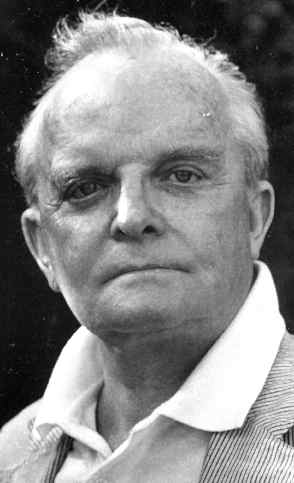
Truman Capote can be defined as a man of great personality and vibrancy. His colorful
character affected not only his writing but his fame was as well. Capote’s peculiar childhood and homosexuality caused the themes of his work to follow a common thread; Capote often wrote about loneliness, loss of innocence, and the power of love. Through looking at Capote’s life, one can see why Capote was so fascinated with these topics. Capote’s writing is often known for having two sides, a dark and disturbed side generally seen in his early fiction, and a lighter side. His lighter side can be seen in his novels and novellas like Breakfast at Tiffany’s, where he highlights the life of parties and glamour, while his darker side comes to the surface in his most noted novel In Cold Blood. Capote’s dark side of writing often depicts a lost and lonely character; much like Capote was himself as a child. In his lighter works, Capote’s ephemeral life of fame and fortune mirrors the animation and energy of his characters.

In his short stories, Capote follows the same routine; often his stories chronicle the happy and extravagant life of the wealthy, while some of them contain a friendless and secluded outsider. He was often criticized for a lack of diversity in his work as a result of these recurring characters. Paul Levine, an award-winning author remarks that “The reaction to the amazing success of his early books has relegated Capote to the position of a clever, cute, coy, commercial, and definitely minor figure in contemporary literature, whose reputation has been built less on a facility of style than on an excellent advertising campaign. Even an earnest supporter would have to admit that Capote’s stories tiptoe the tenuous line between the precocious and the serious.” These issues in Capote’s writing can be easily understood by examining Capote’s childhood, and later his life as a celebrity. Levine refutes the view of Capote’s work as trivial, “the attacks on Capote seem more personal than literary.” Capote’s upbringing was not only distressed by the divorce and negligence of his parents, but also the difficulties he had growing up as a homosexual in a small Southern town. Due to Capote's harsh past, his work which on the surface may be interpreted as tenuous and weak, is indeed more meaningful and profound than it seems.
Capote's fame began with the appearance of "A Tree of Night" in magazines like Harper's Bazaar and Mademosielle in 1949. It is one of Capote's quintessential dark stories. The main character, a young girl named Kay, finds herself in the middle of nowhere, alone with two carnival performers. These people torment Kay and try to make her buy a "love charm", but their general appearance is what frightens Kay the most. Kay must decide what to do, but she is completely alone to do so. I would suggest this story because it is eerie and intriguing, and is very typical of Truman Capote because it reflects the intense fear that so preoccupied him. (AF)

Men and Women in Isabel Allende’s The Stories of Eva Luna.


In her short story collection, The Stories of Eva Luna, the Chilean author Isabel Allende introduces unconventional characters to the reader. Though, on the surface, her characters are merely entertaining, it is through these characters that Isabel Allende explores the sexuality of women and men and, not only the place of each in the ephemeral sphere of lifetime, but in the perpetual wheel of humanity. Each of her stories compares and contrasts men and women. Known for her extended sagas about multiple generations in one family, Allende changes pace to give us snap shots into the lives of many in her short story collection. At the end of each tale she adds new concepts to her evolving definition of man and woman. Three of Allende’s stories can be highlighted to demonstrate her take on the differences between the sexes: “Two Words,” “Wicked Girl,” and “Clarisa.”

In her short story “Two Words,” Allende juxtaposes the power of men and women. She also uses description to develop individual characters to differentiate between the universal man and woman. In her main character of Belisa, Allende creates a powerful woman on whom people depend to feel connected to the world around them. In Belisa’s relationship with the Colonel, a feared military man and a symbol of terror in her country, Allend highlights how men and women rely on each other’s strenghs and weaknesses to achieve their highest “power” in society or in humanity in general. She dispels stereotypes of men and women through making her non-stereotypical characters seem realistic.

In her story “Wicked Girl,” while addressing the same themes as in “Two Words”, Allende takes another focus as well. This time she hones in on the discrepancy between women’s and men’s regard of love and passion. Allende addresses sexuality through her coming-of-age main character, Elena Mejias, who centers her pre-pubescent awakening on one of the residents of her mother’s boarding house, a mid-aged man named Juan Jose Bernal. Allende points out the power of adults’ sexual radar. None of the adults take an interest in Elena until she begins to grow into her sexual identity. However, Allende differentiates that sexuality has a tighter grip on the identity of men than it does on women.

Allende’s short story “Clarisa” challenges reality, as all her stories do, in order to prove a greater point about humanity. In this story, Allende analyses the benevolence of womanhood, and contrasts this with the weaknesses and strengths of men. She particularly highlights Clarisa, a saint-like figure with her sloth husband. However, Allende includes Clarisa’s good-natured sons and gives examples of Clarisa’s petty habits to offset the negative and positive focus on men and women respectively.


I recommend to all of you that you read "Two Words" because Allende uses powerful language and discription to butress the discrepancy between the universal man and woman. (SBS)

The Struggle to be Understood


“I’m not a saint yet. I’m an alcoholic. I’m a drug addict. I’m a homosexual. I’m a genius. Of course, I could be all four of these dubious things and still be a saint,” Capote said in a self-interview (Krebs). Capote was a physically odd person, very effeminate in both physique and manner; he spent his entire life trying to prove himself through his writing. His early work exposed through his characters the feelings of isolation and abandonment that he faced when he was growing up. Later, his characters revealed his dream of being accepted into the upper class, then, his rise and fall from grace and finally his return to isolation and near insanity due to drug abuse. Truman Capote is known for his tales of the idle rich and their counterparts, the poor unintelligent southern lower class. In his own lifetime, Capote experienced both life styles. His climb up the social ladder and his ultimate rejection from the upper class is reflected in many of his stories. Though the names had been changed, and the stories slightly spiced up, his characters were instantly recognized; a fact which outraged his social companions who immediately ejected him from their social circle. Capote’s stories portray themes of isolation, deception, contradictions between the classes and later insanity all of which were subjects directly from Capote’s life as well.
Despite seemingly vast differences in style, genre and form, it is the underlying connection between fact and fantasy existing in all of Capote’s stories that make them so intriguing. This blend of fact and fiction was Capote’s claim to fame as well as the catalyst of his self-destruction. One cannot truly understand the meanings of Capote’s works without first having some knowledge of his life because of the omnipresence of his own experiences and emotions in his works. Capote’s life is a part of every story, from “A Christmas Memory” to “A Tree of Night,” Breakfast at Tiffany’s and even In Cold Blood. Capote used his writing first to discover and explain himself, then to plead for the acceptance of others, as his ladder to fame and fortune, and ironically as his slide into self-destruction. Without his writing, the abandoned awkward boy from the South would never have had his prayers answered.
I would recommend most of the stories that I read; however, to those who have not read it yet, Breakfast at Tiffany’s is an absolute must. Unfortunately, I was not able to use this story in my paper because it is a novella rather than a short story. Breakfast at Tiffany’s, like many of Capote’s other works is drawn from his own experiences and it is extremely interesting to look for signs of Capote in each of his characters. (WW S)

Thursday, May 17, 2007

Influence

Hey guys! I thought I would post my intro, conclusion, and one of the stories I wrote about, which would give everyone a deeper understanding of what I wrote about. I related her other short stories to her life, emotions, and historical time period, all of which affected her work.

Virginia Woolf will forever be remembered and revered as a brilliant writer who achieved great success in spite of a world full of pain and suffering, and a tumultuous personal life. Woolf’s personal life had a great impact on her writings, starting from childhood and her experiences throughout the rest of her life. World War I reared its ugly head and the horror of the war greatly affected Woolf’s already delicate mental state. She lived through the Great Depression where she saw more hardships. Virginia Woolf’s works are multidimensional in that they are all affected by her personal biography, as well as the historical events that surrounded her writing, namely World War I. This is evident in examining selected short stories, “An Unwritten Novel,” “Sympathy,” “The New Dress,” and “Mrs. Dalloway in Bond Street.” Through exploring these short stories, one can clearly pick up on the influences from Woolf’s personal life and feelings, and the atmosphere of fear and disruption created by the war.
Mrs. Dalloway is one of Virginia Woolf’s most iconic women. People from all walks of life know Clarissa due to Woolf’s most famous novel, Mrs. Dalloway. What some people might not be as aware of is that Mrs. Dalloway is featured in many of Woolf’s short stories from around the time when she was writing and revising her novel. One of the reasons Clarissa endures as a character is because of her entirely human characteristics. Julia Briggs says, “Clarissa is humanly inconsistent: at once cold and self-absorbed; yet also warm and full of sympathy” (137). The story follows Clarissa as she walks in London to purchase a pair of gloves. On her way to the shop, she runs into various associates who frequent her parties. As she walks along, she enjoys making comments in her head about the different people she encounters, “the fat lady had taken every sort of trouble, but diamonds! Orchids! At this hour of the morning!”(Woolf 155). Clarissa is clearly a woman of the time. She thinks of menstruation as a negative occurrence, and asks, “How then could women sit in Parliament? How could they do things with men? For there is this extraordinarily deep instinct, something inside one; you can’t get over it; it’s no use trying” (153). Clarissa feels that because of the bodily differences, that women and men simply cannot participate in the same activities. It is clear that Mrs. Dalloway is a strong, intelligent woman; she “would have given anything to be like that…talking politics, like a man” (156). But she knows she will never receive that opportunity. This is a combination of Woolf voicing frustration at the social viewpoint of women, and her “impatience with conventions that prevented women writers from writing openly about their own bodies” (Briggs 139).
The encounter between the shop girl and Mrs. Dalloway goes fairly smoothly, though it takes a long time, and finally she gets her gloves. When they split, the shop girl exclaims, “gloves have never been quite so reliable since the war” (158). This comment is an interesting one in that its simplicity holds so much value for many people’s lives. One sentence has the ability to show that everyday life was changed for those who lived during the war, and even something as trivial as gloves had changed forever; nothing was untouched, and this is something important that Woolf wants the reader to identify with and understand. Clarissa realizes that “thousands of young men had died that things might go on” (159). Even if it meant that life would always be a little darker. “Mrs. Dalloway in Bond Street” has many influences from both Woolf’s life and personal feelings and the history that surrounds it. Woolf shared with her diary, “how entirely I live in my imagination; how completely depend upon spurts of though, coming as I walk, as I sit; things churning up in my mind” (Briggs 134). Woolf created stories using her opinions and experiences from her life. This short story is a wonderful culmination of influences from all aspects of Woolf’s personal viewpoints.
“Somehow the connection between life and literature must be made by women,” Woolf wrote this in her diary in July of 1922 (109). She firmly believed that literature is a great vehicle for documenting everyday life for posterity and for reflection. Through her short stories, the reader can examine the connections between her life and her opinions, and they both shine through freely. Her aggravation in not being able to freely write of a woman’s body and frustration at women not being able to participate in all aspects of society are seen in “Mrs. Dalloway in Bond Street.” Feelings of inadequacy and seeing through the falsities of society are prevalent in “The New Dress” where Mabel does not fit in with the rest of the party. “Sympathy” shows the reader the anxieties that women and society were feeling at the time over death, and the feelings one experiences after hearing of death, at a time when many young men were dying for their country. Finally, “An Unwritten Novel” examines the creative process of a woman writer attempting to create an interesting character. Woolf’s writings are a vehicle for her to express herself in a patriarchal and class-dominated society that had lived through unimaginable horror due to the First World War. MCWR